

Types of Pearls - Natural Wonders & Beauty
HOW DO PEARLS FORM?
pearl earrings, pearl necklaces or pearl rings – anyone looking for stylish, elegant, or fairytale jewelry cannot overlook pearls. According to legends and traditions, pearls have always had a captivating and above all magical effect on people. In many ancient cultures, such as in China, India, Persia, Egypt, Greece, or Rome, they were considered one of the most precious and beautiful jewels. The ancient Persians referred to the natural product as the 'dewdrops of light.' In many cultures, the pearl still holds deep symbolic significance today. In this article, you will learn how pearls form and what makes them so precious. Additionally, we introduce you to various different types of pearls .

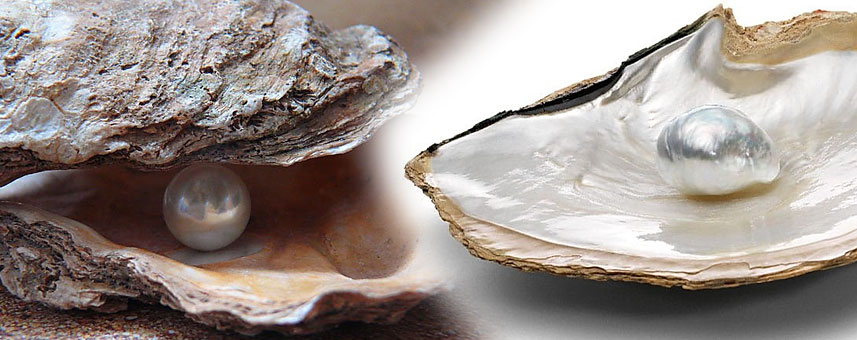
Pearls are produced by mussels or sea snails, which occur in both freshwater and seawater. The mollusks deposit nacre on the inside of their shell to make it harder. This protects them from predators. When a foreign object, such as a grain of sand, tiny fish, or unwanted parasite, enters the mussel shell, it is enclosed by the mantle tissue. Subsequently, nacre is deposited around the foreign object. This leads to the formation of pearls.
Mussels and snails in salt and freshwater can produce the precious shimmering natural treasure as a protective reaction. However, only a few mussels or snails are capable of doing so. The genus Pinctada is among the best-known mussels that can produce nacre and also pearls.
WHAT TYPES OF PEARLS ARE THERE?
Pearls are among the oldest pieces of jewelry of humanity and have always been classics in the fashion world. They are natural products, so they do not need to be processed. They are already perfect in their shape and surface by nature. Naturally grown pearls are quite rare and can only be retrieved from the sea through elaborate pearl fishing. It is only pearl cultivation that makes the wide acquisition and possession of these jewelry pieces possible. About 100 years ago, pearls were first cultivated in Japan. Nowadays, there are still natural pearls that are dived for. However, the vast majority are cultured pearls. The cultured pearl undergoes the same process of nacre formation as the natural pearl, only starting it with human assistance. Therefore, natural and cultured pearls are identical in many areas. Both are natural products that only grow in mussels or snails.
THE MOST IMPORTANT TYPES OF PEARLS:
- Akoya pearls
- South Sea pearls
- Tahiti pearls
- Freshwater pearls
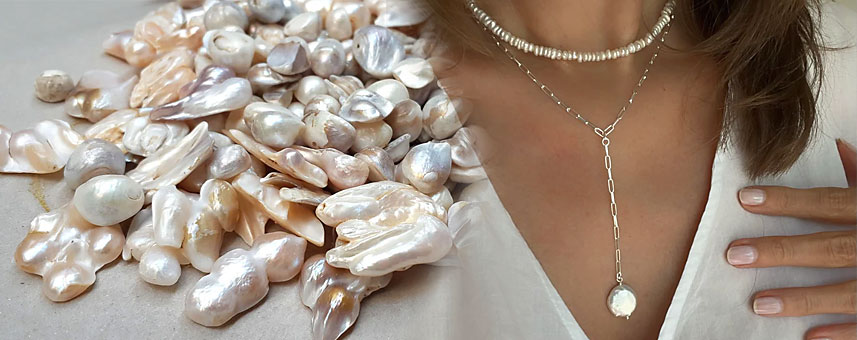
- Keshi pearls
Except for the Keshi pearls, the types of pearls listed here belong to the category of cultured pearls. They grow in different sizes and shapes, have unique characteristics, and vary in their colors. Some are spherical, some oval, some white, some black. Depending on the origin and type of shell, pearl types exhibit certain characteristics. Origin plays an important role in sales. While only one pearl per shell can be cultivated in a saltwater shell, up to over 20 pearls are grown in a freshwater shell. Therefore, saltwater pearls like Akoya, South Sea, and Tahiti inherently have a higher price than freshwater pearls.
AKOYA PEARLS
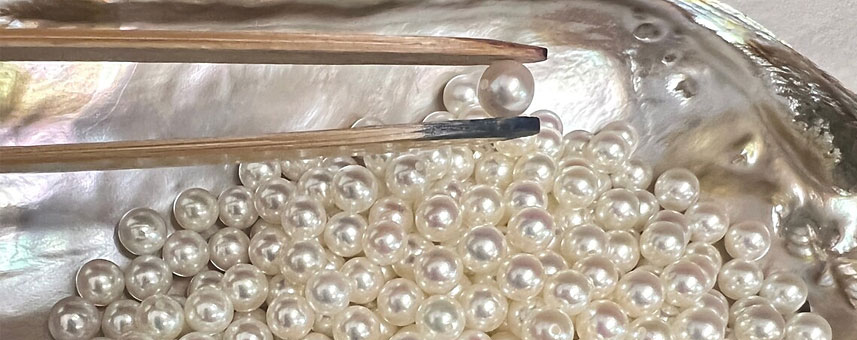
Akoya pearls are considered the original pearls and are regarded as the most feminine and classic of their kind. These saltwater pearls were the very first cultured pearls. They are cultivated in the shell species Pinctada martensii and Pinctada fucata, which are among the smallest pearl oysters in the world. Akoya pearls typically range in size from 5 to 10 mm. Among all types of cultured pearls, the Akoya pearl stands out particularly for its fascinating luster – the quality criterion most highly rated by pearl experts. The mostly round Akoya pearls come in colors such as white, pink, cream, gold, gray, or light green. Most Akoya pearls come from Japan.
SOUTH SEA PEARLS
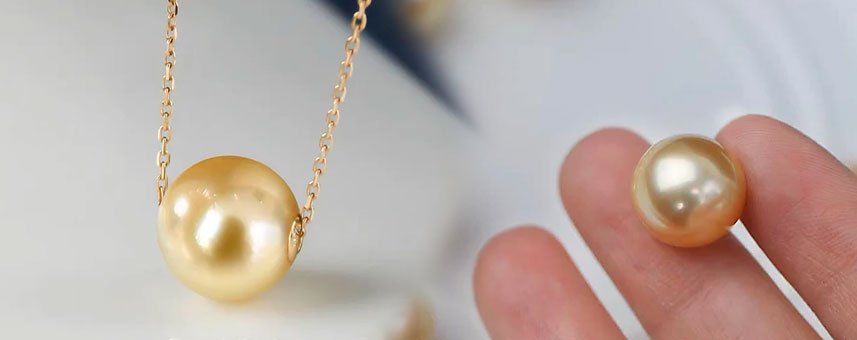
Their name was given to South Sea pearls by the Japanese. The type of pearl is still cultivated today in the seas south of Japan. South Sea pearls are cultivated in the Pinctada maxima oyster, which is divided into a gold-lipped and silver-lipped type. An average South Sea pearl is about 10 to 20 mm in size. Due to its size, it is also known as the queen of cultured pearls. The rare treasures have a soft, velvety luster that makes them shine in a particularly gentle way. The color palette of pearls grown in the Pinctada maxima oyster ranges from silver-white and white-rose to fine cream and champagne tones. The South Sea pearl is excellent for jewelry making.
TAHITI-FIJI PEARLS
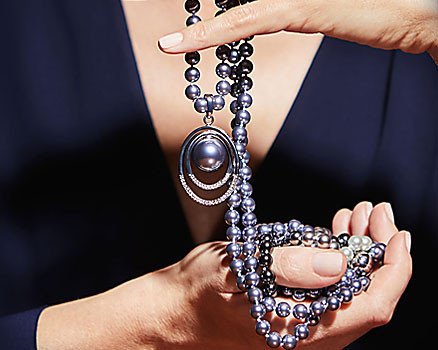
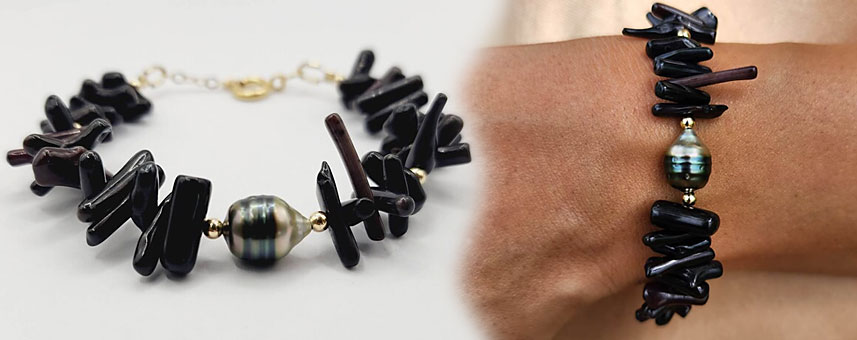
Tahiti pearls are also referred to as black pearls due to their color. The color is decisive for their price. Dark pearls are usually traded at high prices. However, Tahiti pearls are rarely actually black. Much more common are silver-gray, blue-green, aubergine, or bronze-colored Tahiti pearls. Characteristic of this type of pearl is a metallic luster and changing shades. They are exclusively cultivated in the turquoise lagoons and atolls around French Polynesia. These rare types of pearls have a diameter of about 8 to 16 mm. They come from the black-lipped pearl oyster Pinctada margaritifera. Despite their name, the origin of the Tahiti pearl is not Tahiti itself, but the island and coral-rich surroundings.
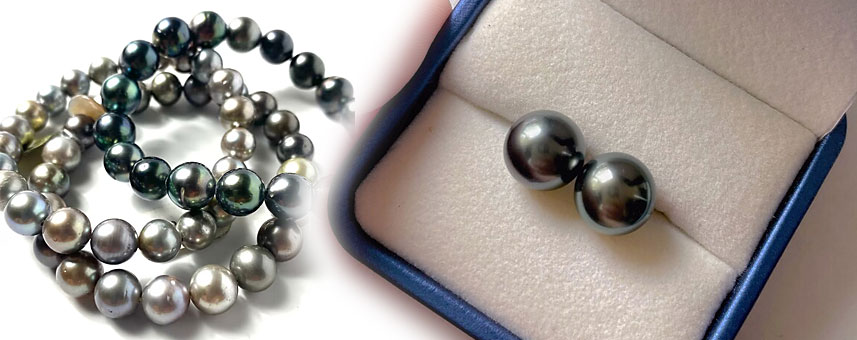
Fiji pearls also arise in the black-lipped oyster and thrive in the completely untouched waters around the island of Vanua Levu in northern Fiji. There, they are cultivated only in very small quantities. Fijian cultured pearls shimmer in all conceivable color nuances – from pastel pistachio green to ocean blue. One might think that this type of pearl reflects the lush vegetation of the South Sea paradise from which it originates.
FRESHWATER PEARLS
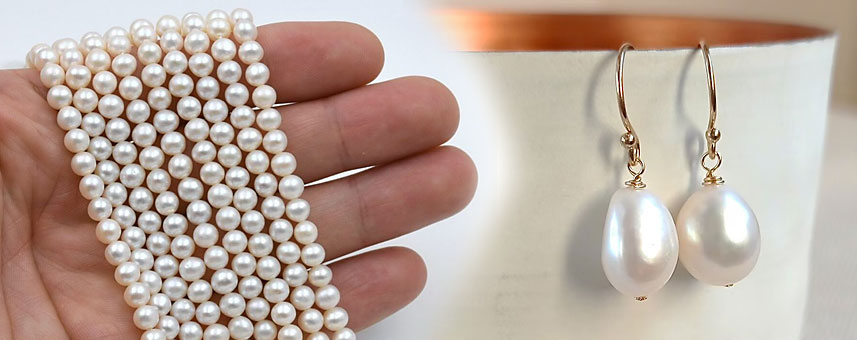
Freshwater pearls are not cultivated in seas, but in lakes and small rivers. No other type of pearl is as versatile as this one. The origin is also in Japan. However, they are mainly produced in China nowadays. Freshwater pearls are naturally white to cream-colored, but also come in shades of pink, old rose, and apricot. Freshwater pearls are especially known for their extraordinary variety of shapes and colors. For this reason and because of their attractive prices, they have helped pearls in general to achieve a new, young, and feminine image.
KESHI PEARLS
The word 'Keshi' comes from Japanese. It means poppy seed. In the world of pearls, it is the term for very small, non-nucleated pearls. Keshi pearls are made entirely of nacre and thus come closest to real pearls. Keshi pearls are characterized by a particularly beautiful silvery luster, as they are made entirely of 100% pure nacre. A good Keshi pearl is therefore in no way inferior in luster to a saltwater cultured pearl. Another characteristic is the special, usually baroque shapes.
Keshi pearls are small and irregular. They form by chance while one or more large pearls mature in a shell. Thus, they are considered natural pearls. Their color always corresponds to the Akoya, South Sea, or Tahitian pearls from the same shell.