


Cubic Zirconia & Diamonds
What you should know about cubic zirconia and diamonds
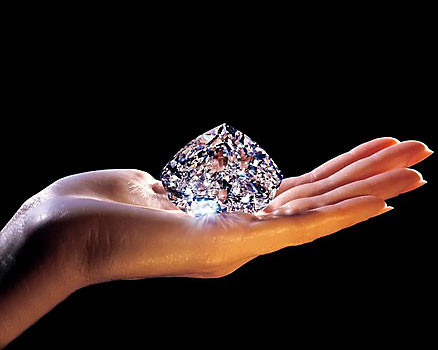
There are two types of diamonds: natural and synthetic. Both are compositionally and optically similar. Synthetic diamonds are made in the lab, while natural diamonds are extracted from reserves in the earth. In most cases, these two types of diamonds are similar. However, natural diamonds are expensive due to their rarity and natural occurrence. The diamond made in the lab is more affordable and accessible in the jewelry market.
Although cubic zirconia looks similar to diamond, it is not. It is completely lab-made and has few similarities with diamonds, except that it looks similar from a distance. Diamonds are made of carbon, while cubic zirconia is made of zirconium oxide. Since each gemstone has its advantages and disadvantages, the discussion between cubic zirconia and diamond will never end.
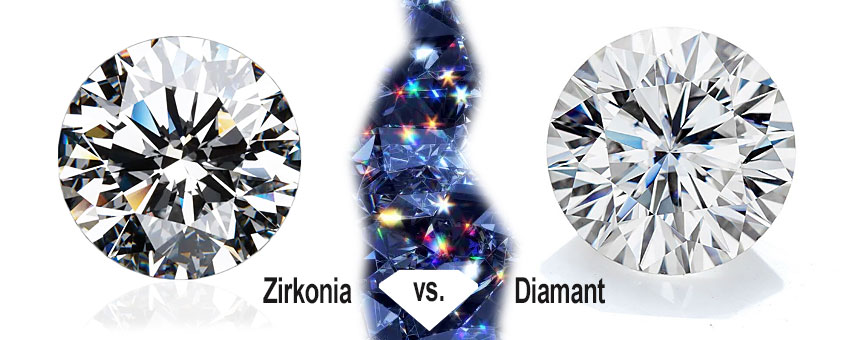
Can you tell the difference between a zircon and a diamond?
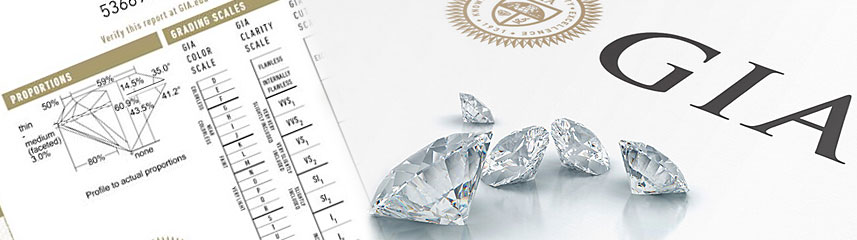
To the untrained eye, a zircon does not look any different from a diamond. Be careful when buying 'diamond' jewelry. There are unscrupulous sellers who try to sell zircons as diamonds. Always request a certificate of authenticity (e.g., GIA or AGS) in such cases. Diamonds with a GIA certificate therefore have the greatest value retention. If the jeweler does not provide these documents to prove the authenticity of the diamond, it is better to avoid it. Always buy diamond jewelry only from trusted sellers.
Zirconia vs. Diamonds: Durability
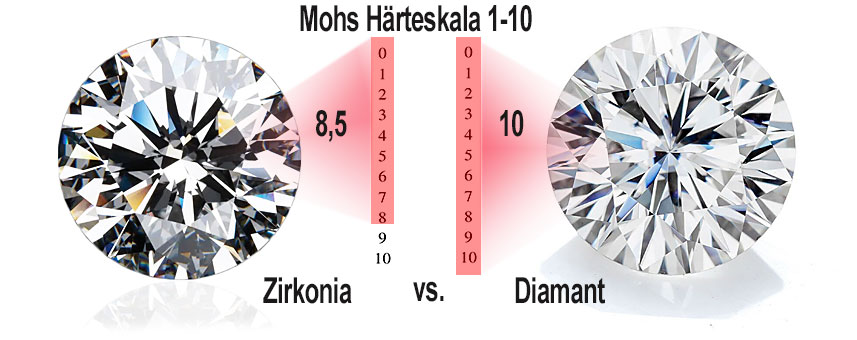
Diamonds are more durable than zirconia. Diamond is rated 10 on the Mohs hardness scale, while zirconia is between 8.0 and 8.5. Unlike zirconia, diamonds are more robust and can be worn more frequently. Although diamond requires less maintenance, zirconia needs to be polished more often to maintain its brilliance. Diamond offers you more durability in the long run. The difference between zirconia and diamond should be decisive here.
Zirconia vs. Diamonds: Color
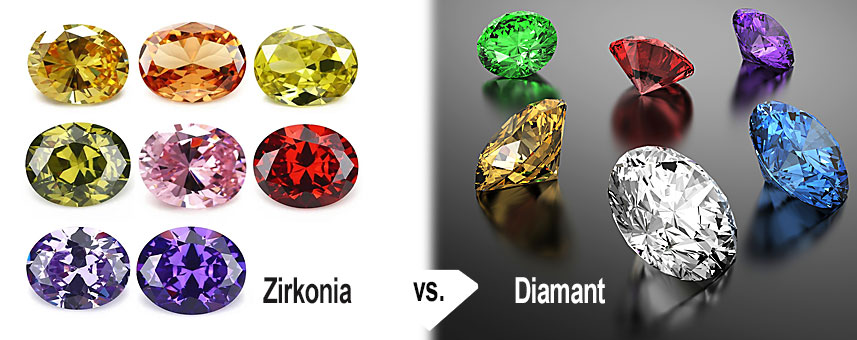
The fact that cubic zirconia is manufactured in the lab means that the color can be adjusted as desired. However, colorless diamonds are not so easy to obtain, as they occur more naturally. These colored stones are expensive and rare. The color scale for diamonds ranges from D (colorless) to A (yellow).
It does not mean that there are no colored cubic zirconia, but they are just as expensive as the colorless version. Colored diamonds are more expensive than white or colorless diamonds. Colorless zirconia resemble diamonds when viewed with the naked eye. Without the expensive price, this stone looks just like a diamond.
Zirconia vs. Diamonds: The Clarity
The purity grade of a colorless diamond is an important factor that influences its value when purchasing. There are various purity grades of diamonds, from flawless to included. The purity of a diamond is a crucial factor in determining its price. Flawless diamonds are definitely more expensive than diamonds with inclusions.
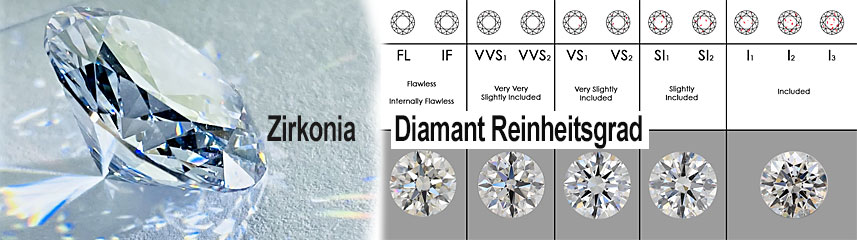
Cubic zirconia is flawless because it is manufactured in the lab. Buyers should note this important difference between zirconia and diamonds.
Flawless (FL): Flawless - Under 10x magnification, no inclusions or blemishes are visible.
Internally Flawless (IF): no internal inclusions are visible under 10x magnification.
Very, Very Slightly Included (VVS1 and VVS2): Inclusions are very difficult to see under 10x magnification.
Very Slightly Included (VS1 and VS2): Inclusions are minor but can be detected by experts under 10x magnification.
Slightly Included (SI1 and SI2): Inclusions are visible under 10x magnification.
Included (I1, I2, and I3): Inclusions are visible under 10x magnification and to the naked eye, and may affect the transparency and brilliance of the diamond.
Diamonds and Cubic Zirconia – Dispersion
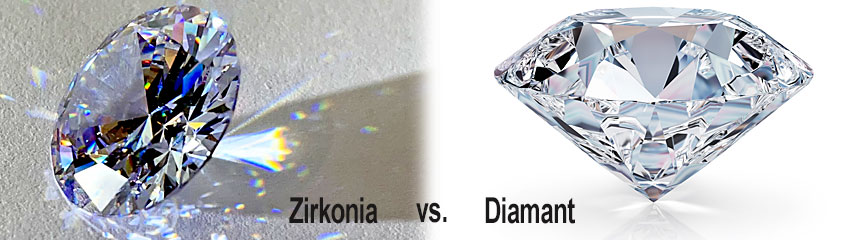
The ability of a gemstone to spread fire is referred to as its ability. The stone shines through this dispersion. Thanks to their dispersion rate of 0.044, diamonds have always been valued for their ability to brilliantly refract light.
Cubic zirconia has a higher dispersion rate of 0.066. This causes light on cubic zirconia to create a telltale 'rainbow effect.' This fact is another difference between zirconia and diamonds, although it is less obvious when viewed when the two stones are smaller. Larger stones have a more distinct distinction.
Some jewelry lovers like the vibrant colors that cubic zirconia and other diamonds show when hit by light. Not everyone loves color brilliance as much as these precious gemstones show. In this case, smaller stones should be considered as they have less color brilliance.
Zirconia vs. Diamonds: The Refractive Index (RI)
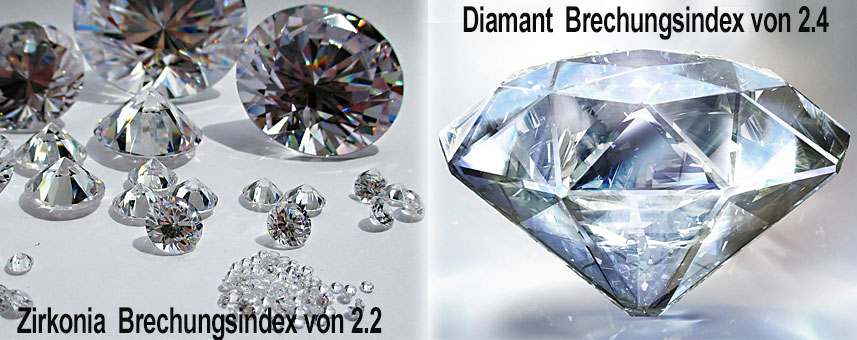
The angle at which light hits zirconia or diamond determines the difference in their refractive index. When the light is bent and reflected, the gemstone sparkles in different ways. Diamonds have more white color brilliance, but cubic zirconia has more.
Diamond has a higher refractive index of 2.42 and zirconia from 2.15 to 2.18. A zirconia holds less light than a diamond.
Zirconia vs. Diamonds: The Density
Cubic zirconia is generally heavier than diamonds due to its higher density. Cubic zirconia is heavier compared to diamonds of the same size.
Zirconia vs. Diamonds: The Value
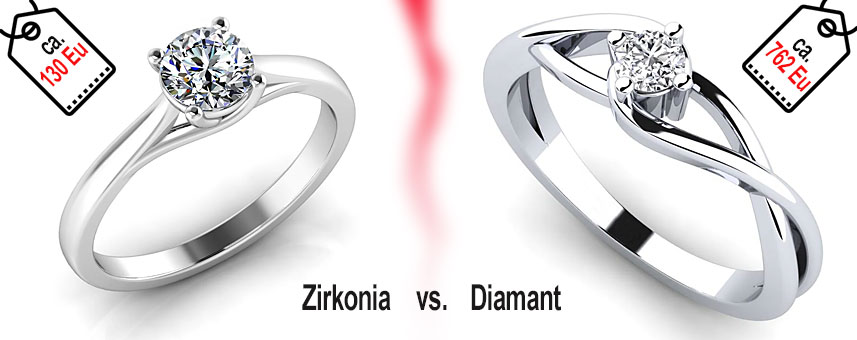
The advantage of buying a cubic zirconia is that it costs less than a diamond. It is the most cost-effective substitute for diamonds. You will find that zirconia is more affordable compared to diamonds. An excellently cut, flawless D-diamond of two carats usually costs about $50,000, while a zirconia costs only about $50! Many jewelry buyers have wondered if zirconia has any value at all, aside from how beautiful and diamond-like it looks. Cubic zirconia has no financial or investment value. It has no market value and should not be considered an investment. Diamonds, on the other hand, are valuable investments.
Context: how does zirconia compare to diamonds?
Due to their natural beauty, unique properties, and impressive marketing tactics, diamonds are undeniably unique, elegant, and prestigious. If you have the money, a diamond is undoubtedly a fascinating choice. If not, cubic zirconia can also be a good option when owning a modern piece of jewelry.
But pearl jewelry offers items that have the same brilliance but cost less. The range of pearl jewelry includes: To the naked eye, cubic zirconia stones look just like traditional diamonds. When manufacturing our jewelry with cubic zirconia, we only use the best from AAA to AAAAA zirconia quality.
For those who want luxury without the extravagant price, a piece is essential to find a balance between affordability and top-notch quality. Jewelry with cubic zirconia is affordable and stunning, so you can always look fresh.
Ready to dive into the glamorous world of pearl jewelry? Check out our pieces to find an outstanding selection of their high-quality yet affordable jewelry.